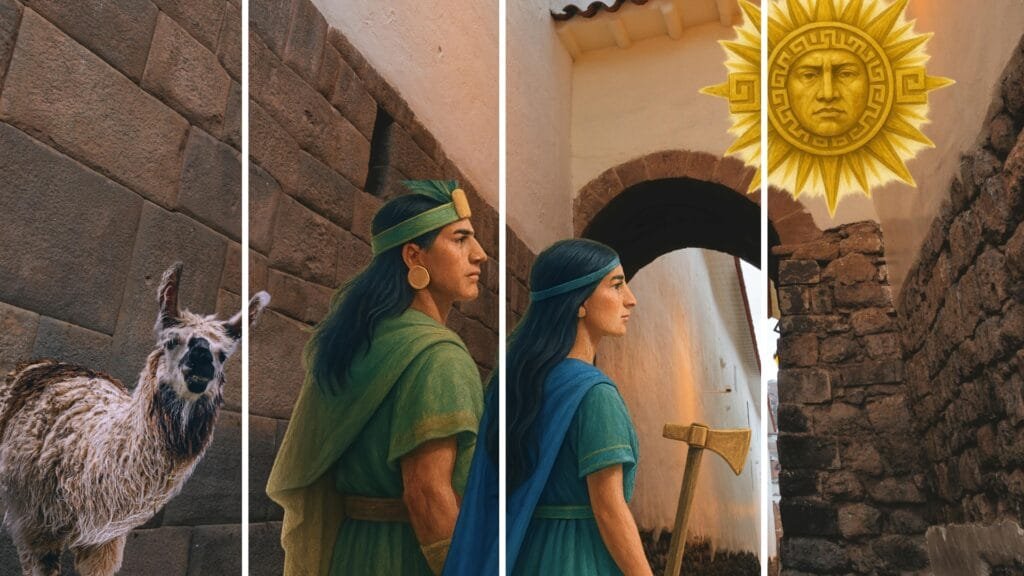
The Inca Empire was one of the most remarkable civilizations in ancient history. From their capital in Cusco, the Incas dominated the Andes with a well-organized political and social system, ingenious technological advancements, and a deep connection to nature and the universe.
Who Were the Incas?
The Incas were an Andean people who, from the 13th to the 16th century, built the Tahuantinsuyo, the largest empire in pre-Columbian America. Their territory extended from southern Colombia to northern Chile and Argentina, covering Ecuador, Peru, and Bolivia.
Originally, the term “Inca” referred only to the emperor, believed to be a descendant of the Sun. Over time, it came to refer to the ruling elite and today is used more broadly for the entire civilization.
The Andean Worldview: Three Sacred Realms
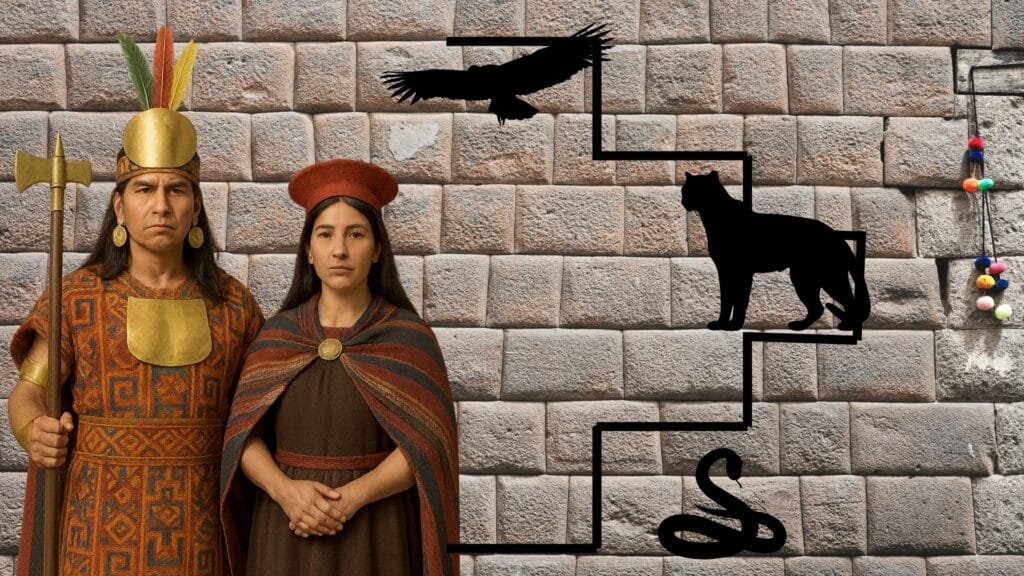
For the Incas, life was divided into three sacred worlds:
- Hanan Pacha (the upper world): home of the gods and celestial beings like the Sun (Inti), the Moon (Killa), and the stars.
- Kay Pacha (the earthly world): the present world where humans live and act.
- Uku Pacha (the inner world): the realm of the dead, roots, and subconscious forces.
This worldview is reflected in their architecture, rituals, and art. The symbolic animals representing each realm were the condor, puma, and snake.
The Inca State: A Model of Organization
Tahuantinsuyo was a highly efficient empire:
- It had a centralized administration, led by the Sapa Inca (emperor).
- The territory was divided into four regions or “suyos”, all connected to Cusco.
- The ayllu was the basic social unit, based on family and reciprocal labor.
- There was no money: exchange was based on barter, and work systems like ayni (mutual help) and minka (collective labor).
Chaskis, the imperial messengers, carried messages and census data using the quipu, a system of knotted cords used to record information.
Inca Astronomy: Sacred Science
The Incas were expert sky watchers. Their agricultural calendar was based on the movements of the sun, moon, and stars. Key examples:
- The Intihuatana at Machu Picchu is a solar clock marking solstices.
- Dark constellations (shapes seen in the Milky Way’s shadows) were as significant as the stars themselves.
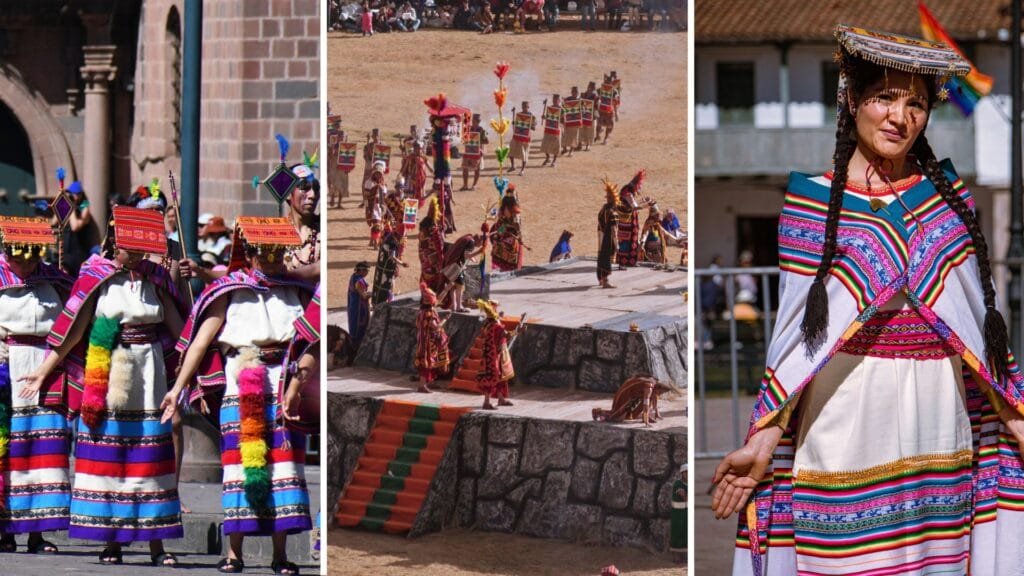
Cusco’s layout followed astronomical alignments, and festivals like Inti Raymi (Festival of the Sun) were based on solar cycles.
Language: Quechua, a Living Heritage
Quechua was the official language of the empire and is still spoken throughout the Andes. It had no alphabet, but the quipu served as a mnemonic device. Oral tradition preserved knowledge of history, mythology, agriculture, and medicine.
Inca Cuisine: Nutrition and Ingenuity
The Incas cultivated over 70 types of crops, adapted to various climates. Key foods included:
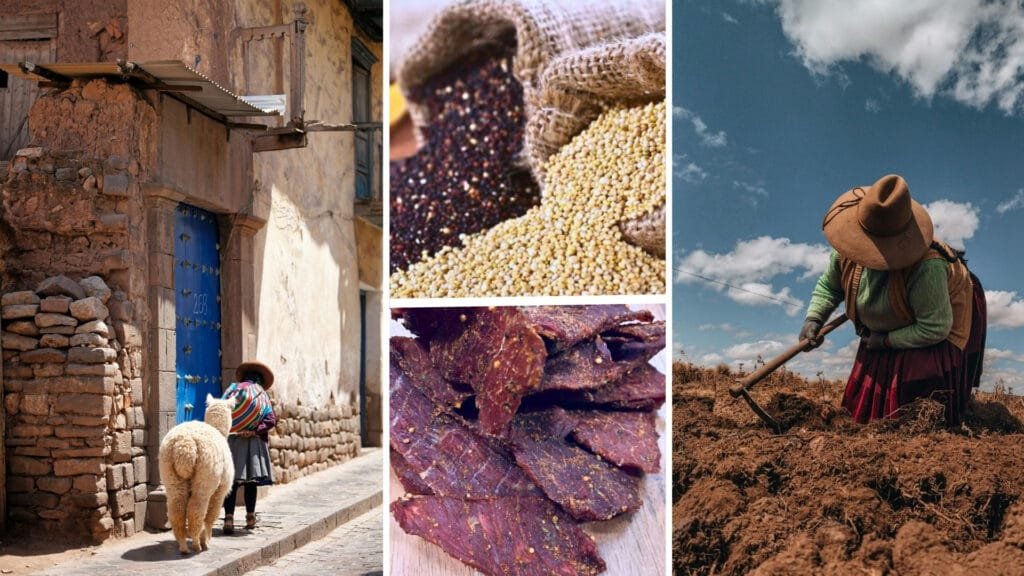
- Potatoes: thousands of varieties were domesticated.
- Quinoa and amaranth: high-protein superfoods.
- Maize: used to prepare chicha, a ceremonial drink.
- Charqui: dried meat for long journeys.
Their agricultural terraces and irrigation systems are still in use today.
Technology Without Iron or Wheels
Despite lacking the wheel and iron tools, the Incas achieved remarkable technological feats:
- Earthquake-resistant architecture: precisely cut stones fitted without mortar (polygonal masonry).
- Vast road network: the Qhapaq Ñan spanned over 30,000 kilometers.
- Hydraulic engineering: canals, fountains, and aqueducts.
Food storage: tambos were natural refrigeration storage centers.
A Living Legacy
Though the Spanish conquest ended the empire, Inca traditions live on in Andean music, textiles, languages, festivals, and the sacred respect for Pachamama (Mother Earth).
Discover the Inca World with Wonderful Machupicchu
Want to learn more about the Incas while walking through their sacred temples and trails? At Wonderful Machupicchu, we guide you with care and knowledge through the living legacy of this powerful civilization. Explore, learn, and feel the spirit of one of the greatest cultures of the Americas!